In My Malta Buddha Era Retro Wavy SVG
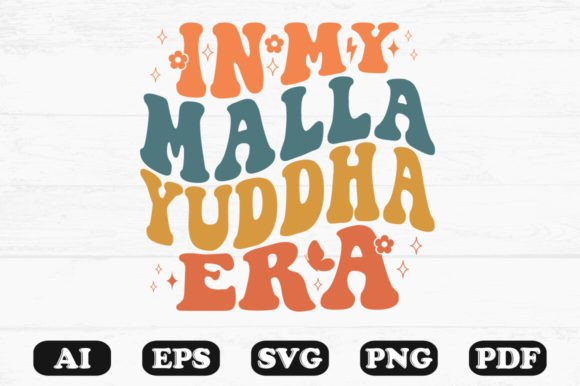
As a designer who’s stitched over 300 custom embroidery projects—from boutique baby onesies to Etsy sweatshirt collections—I opened In My Malta Buddha Era Retro Wavy SVG expecting charm, not clutter. What I found was a quietly confident design: relaxed but intentional, nostalgic without leaning into cliché. It doesn’t scream “vintage”—it breathes it. The wavy baseline, soft serif weight, and subtle spacing give it rhythm—not just text, but typography with posture. That matters deeply when you’re translating pixels to thread.
First Impressions: Mood Over Mechanics
This isn’t a bold statement piece. It’s a gentle invitation—ideal for customers who love mindful aesthetics but don’t want literal spirituality stamped across their chest. Think of embroidering it onto an organic cotton tote for a local yoga studio: the curve echoes the drape of fabric, the letterforms feel hand-drawn but precise enough for clean satin stitch execution. No sharp angles, no tight kerning traps—just smooth, open shapes that translate well to stitch without heavy digitizing cleanup.
The “Buddha Era” phrasing leans into calm, not doctrine. That nuance makes In My Malta Buddha Era Retro Wavy SVG commercially flexible: safe for baby embroidery (on a linen blanket or muslin bib), thoughtful for holiday gifts (a monogrammed pillow cover for a friend’s new apartment), and distinctive enough for small shop merchandise—say, a limited-run apron for a ceramicist’s pop-up stall.
Where It Shines in Real Embroidery Projects
- Custom apparel: Works beautifully on mid-weight cotton tees and fleece-lined sweatshirts—especially when centered above the left chest or along the hem. The wave’s gentle arc avoids distortion on curved seams.
- Tote bag design: Stitches cleanly at 3.5–4 inches wide. Holds legibility even with slight fabric movement during hooping.
- Baby embroidery: Soft enough for onesies and burp cloths—but avoid placing near necklines where dense fill stitch might irritate sensitive skin.
- Embroidered patch: Clean outlines and moderate height make it ideal for iron-on or sew-on patches on denim jackets or backpacks.
- Holiday & gift embroidery: Paired with neutral thread (oatmeal, charcoal, sage), it reads as warm and personal—not trendy, not dated. Perfect for handmade Christmas stockings or wedding guest favors.
Where to Proceed With Care
This design walks a fine line between relaxed and underdefined—and that shows up most clearly in specific embroidery contexts:
- Small hoop sizes (under 4”): The full phrase may feel cramped. Consider using just “Malta Buddha Era” or cropping the wave baseline if scaling down for caps or wristbands.
- Textured fabrics (terry cloth, bouclé, heavy linen): The wavy baseline can blur visually if stitch density isn’t adjusted. A light tear-away stabilizer helps maintain flow without stiffness.
- Stretchy fabric (ribbed knits, lightweight jersey): Hoop with medium-cutaway stabilizer and reduce top tension slightly—the curves respond better to controlled stretch than aggressive pull.
- Dark fabric: Light-colored thread (cream, pale gold, soft grey) lifts the design without glare. Avoid white on black unless your machine handles fine satin stitch consistently.
- Curved surfaces (caps, beanies): Test stitch on a cap blank first. The wave’s continuity can break if the front panel isn’t perfectly flat during hooping.
What It Adds to Your Finished Product
In My Malta Buddha Era Retro Wavy SVG doesn’t elevate your product by being flashy—it does it by feeling *considered*. Customers notice that. On an Etsy listing, it signals craftsmanship over clip art. On a boutique shelf, it reads as intentional branding—not generic decor. And for craft business owners, it supports brand consistency: pair it with minimalist packaging and earth-toned mockups, and you’ve got cohesion without repetition.
It also builds trust. When someone buys a handmade product with this design embroidered on a tea towel or pillow cover, they’re not just buying utility—they’re buying tone. Calm. Intention. A quiet nod to slower living. That emotional resonance translates directly to repeat buyers and word-of-mouth referrals.
Practical Designer Notes Before You Stitch
- Test first: Run a sample on scrap fabric matching your final project’s weight and weave—even if it’s just one letter.
- Check contrast: View your thread color choice against both light and dark fabric backgrounds in natural light. Some muted tones disappear on off-whites.
- Review stitch density: If your embroidery software allows, inspect the fill areas—look for overlapping satin columns or thin running-stitch connectors that might snag.
- Confirm hoop compatibility: Measure the design’s widest point. Does it fit comfortably within your standard hoop with ¼” clearance?
- Inspect corners and curves: Zoom in digitally—do any letters taper too sharply? Does the wave end cleanly, or trail off? These details impact stitching reliability.
- Mock it simply: Drop the SVG into a black-and-white printable mockup before digitizing. Does the rhythm hold? Does spacing feel generous, not sparse?
- Stabilizer strategy: For woven cotton or linen: medium tear-away. For knits or towels: cut-away + topping. Never skip it—the wave relies on stability to keep its shape.
- Licensing check: Since this is listed as a Graphics product in the Crafts category, verify whether commercial use (e.g., selling finished embroidered items on Etsy) is explicitly permitted. When in doubt, contact the seller before listing.
Bottom line? In My Malta Buddha Era Retro Wavy SVG isn’t for every project—but when it fits, it fits like a well-worn sweater. It’s the kind of design that earns compliments not for being loud, but for feeling *right* on the garment, the bag, the pillow, the gift. Use it thoughtfully, test it honestly, and let its quiet confidence do the talking.